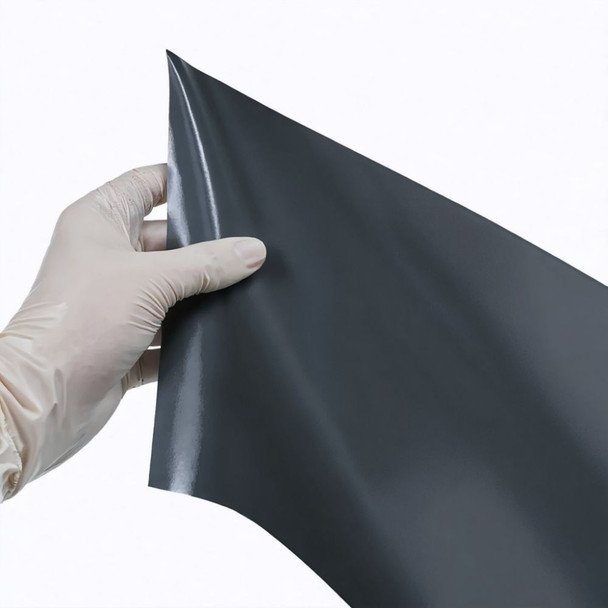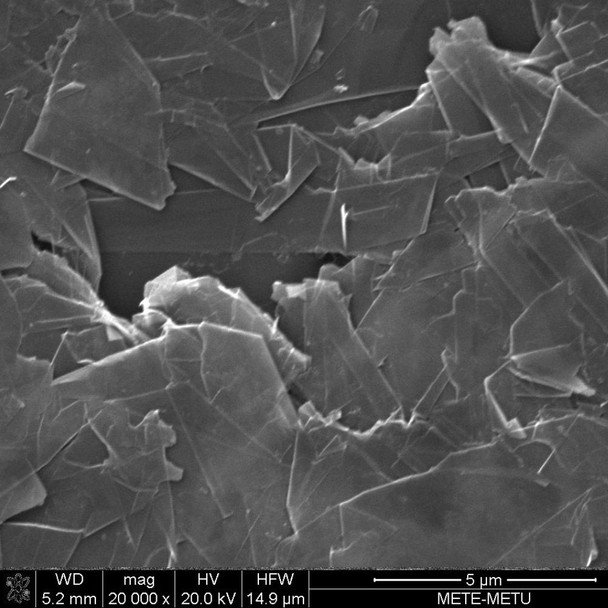
Graphene Nanoplatelet Purity: 99.9+%, Size: 5 nm, S.A: 135 m²/g, Diameter: 7 μm
Graphene Nanoplatelets are advanced nanoparticles composed of thin, platelet-shaped stacks of graphene layers arranged in a planar structure. Owing to their pure graphitic nature, they deliver exceptional electrical and thermal conductivity. When integrated into various materials, these nanoplatelets significantly enhance conductivity, stability, and barrier performance. Their unique properties make them a sought-after additive across multiple industries.
We offer high-quality Graphene Nanoplatelets in large quantities and in various grades suitable for diverse applications and performance requirements.
Technical Properties
| Property | Value |
|---|---|
| Purity | 99.9+% |
| Thickness | 5 nm |
| Diameter | 7 μm |
| Specific Surface Area | 135 m²/g |
| Conductivity | 1100–1600 s/m |
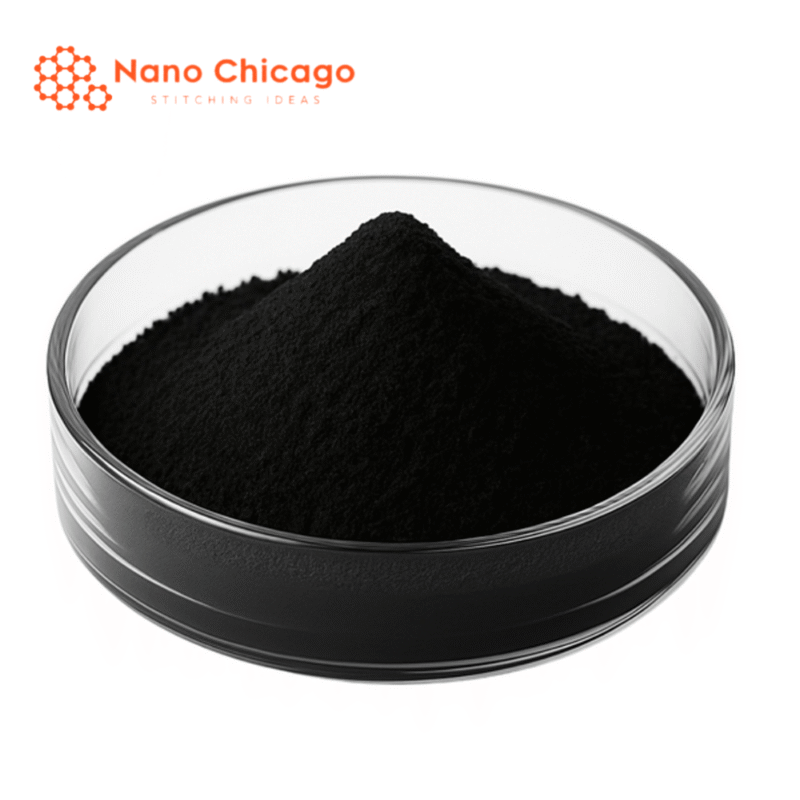
| Color | Gray |
Applications
- Acts as a high-performance additive in composites such as PPO, POM, PPS, PC, ABS, PP, PE, PS, Nylon, and various rubbers.
- Enhances tensile strength, stiffness, corrosion resistance, abrasion resistance, anti-static properties, and lubrication performance.
- Recommended usage for mechanical property enhancement: 2–6 wt%.
- Recommended usage for conductivity enhancement: 2–8 wt%.
Additional Information
Incorporating Graphene Nanoplatelets into composite materials results in significant improvements in electrical conductivity, thermal conductivity, hardness, mechanical strength, and viscosity. Graphene also has the potential to replace conventional materials in modern applications. For instance, adding graphene to epoxy plastics can create lightweight, ultra-strong materials capable of replacing steel in aircraft structures—improving fuel efficiency and overall performance. Due to its exceptional conductivity, graphene can also be used as a protective coating to minimize electrical damage from lightning strikes on aircraft surfaces.