Graphene Quantum Dots (GQDs) – DI Water Dispersion, Concentration: 0.01 mg/ml
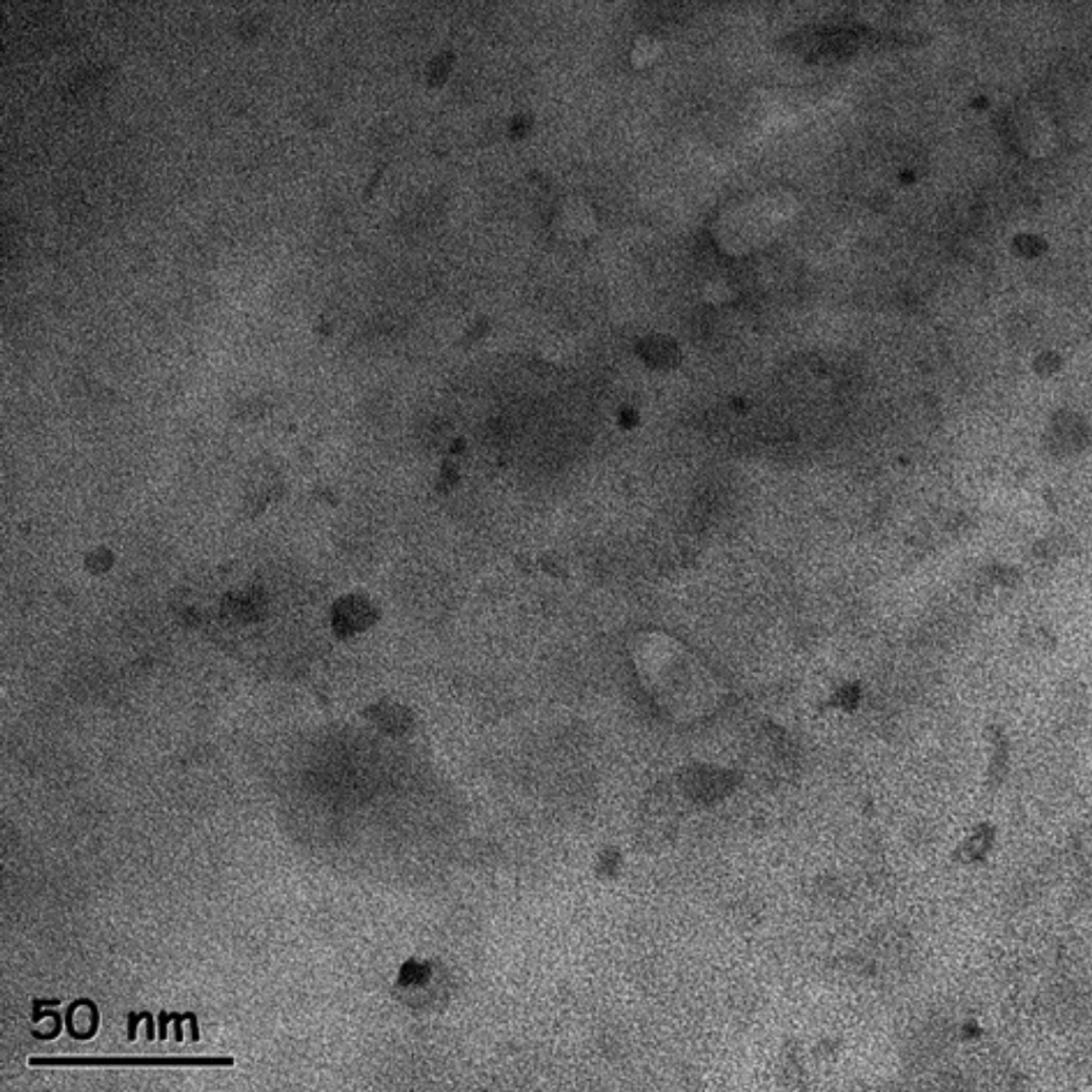
Graphene Quantum Dots (GQDs) are a unique class of zero-dimensional nanocrystals derived from graphene. Featuring a characteristic honeycomb lattice and ultra-small particle size ranging from 1–50 nm, GQDs offer remarkable versatility across advanced technologies. Their nanoscale dimensions enable exceptional optical, electronic, and chemical behavior, making them valuable in next-generation applications within electronics, biomedicine, energy, and materials science. Nanografi provides high-quality GQDs suitable for research and industrial use.
Technical Properties of Graphene Quantum Dots
| Property | Value |
|---|---|
| Diameter | <10 nm |
| Morphology | Spherical |
| Emission Wavelength Range | 445–470 nm |
| Color | Blue |
| Solvent | DI Water |
| Concentration | 0.01 mg/ml |
Standard Analyses Provided
-
Excitation and emission wavelength analysis via PL spectrophotometer
Optional Analyses (extra fee)
-
Particle size distribution
-
Quantum yield
-
Fluorescence lifetime
Applications of Graphene Quantum Dots
- Graphene Quantum Dots are widely used due to their outstanding luminescence, conductivity, biocompatibility, and chemical stability. Key application areas include:
- Optoelectronics
Used in LEDs, photodetectors, and solar cells due to strong and tunable photoluminescence. - Biomedical Applications
Ideal for bioimaging, biosensing, drug delivery, and photodynamic cancer therapy thanks to their low toxicity and high biocompatibility. - Sensors (Including Agricultural Sensors)
Utilized in chemical, biological, and environmental sensors for detecting ions, molecules, and biomolecules. In agriculture, GQDs support smart sensing systems for plant health monitoring, stress detection, and controlled delivery of fertilizers and pesticides. - Energy Storage and Conversion
Improves the performance of lithium-ion batteries, supercapacitors, fuel cells, and photocatalytic systems by enhancing charge transfer and conductivity. - Environmental Applications
Employed in water purification, pollutant detection, and photocatalytic degradation of contaminants due to their stability and redox activity.