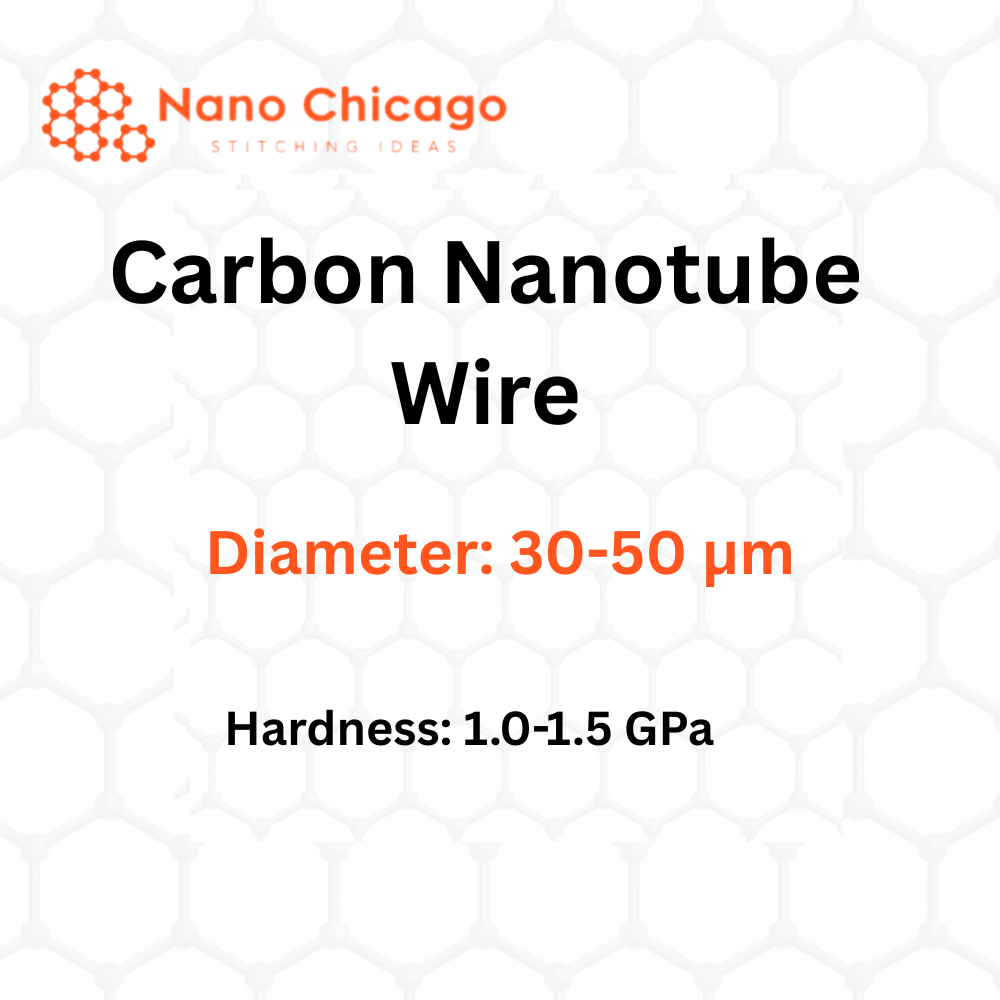
Carbon Nanotube Wire, Diameter: 30-50 μm,
Hardness: 1.0-1.5 GPa
Description
Carbon nanotube (CNT) wires are advanced materials produced from carbon nanotubes, which are cylindrical molecules with nanoscale diameters. These wires take advantage of the exceptional electrical conductivity, mechanical strength, and thermal stability inherent to carbon nanotubes. They are extremely lightweight yet strong, offering a conductivity-to-weight ratio that exceeds traditional materials such as copper.
Applications
Carbon nanotube wires support a variety of promising applications across multiple industries due to their distinctive properties. Key applications include:
Energy Storage and Transmission: Their high surface area and excellent conductivity enable the development of more efficient batteries and supercapacitors. Their low weight and superior conductivity also make them strong candidates for power transmission lines, where they can significantly reduce energy losses compared to conventional materials.
Electrical and Electronic Devices: With outstanding electrical conductivity and high current-carrying capacity, carbon nanotube wires are ideal for advanced electronic components. When utilized in microprocessors, sensors, and conductors, they enhance performance and energy efficiency beyond what is achievable with traditional materials like copper.
Aerospace and Automotive Industries: The combination of strength and low weight makes carbon nanotube wires highly suitable for aerospace and automotive use. They can improve structural integrity while reducing overall weight, resulting in better fuel efficiency and enhanced performance in vehicles and aircraft.
Wearable Electronics: Carbon nanotube wires offer flexibility and durability, making them well-suited for wearable technologies such as smart textiles and health monitoring systems. They can be embedded into fabrics to produce conductive materials that remain functional even when bent or stretched.
Heat Dissipation: Effective heat management is essential for maintaining the reliability and performance of electronic and computing systems. Thanks to their strong thermal conductivity, carbon nanotube wires are excellent choices for heat sinks and other cooling components.
Renewable Energy Systems: Carbon nanotube wires can improve both electrical and mechanical performance in solar panels and wind turbines. By increasing efficiency and durability, they support broader adoption of renewable energy technologies.