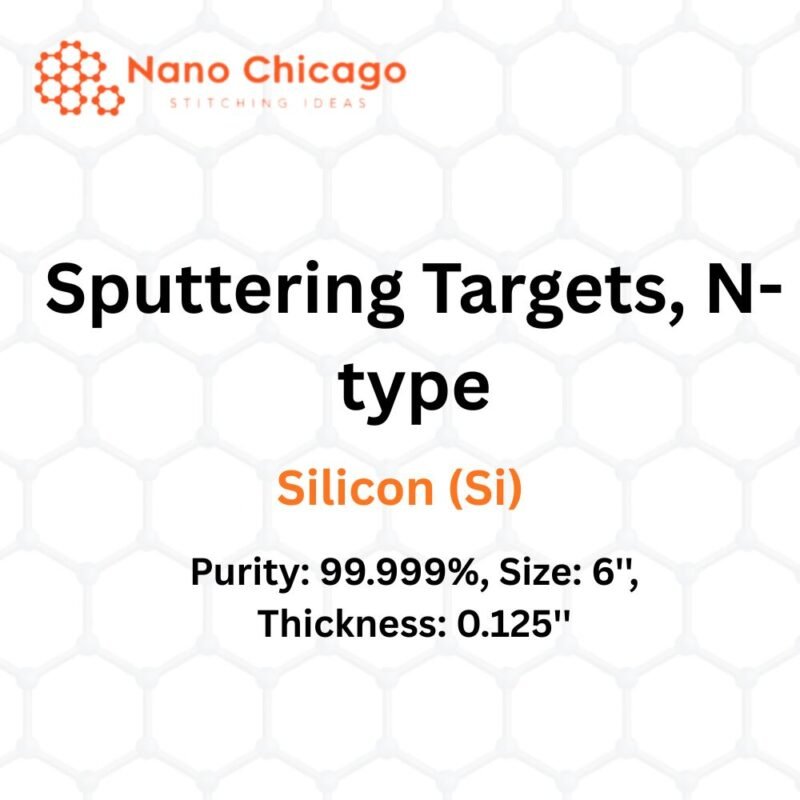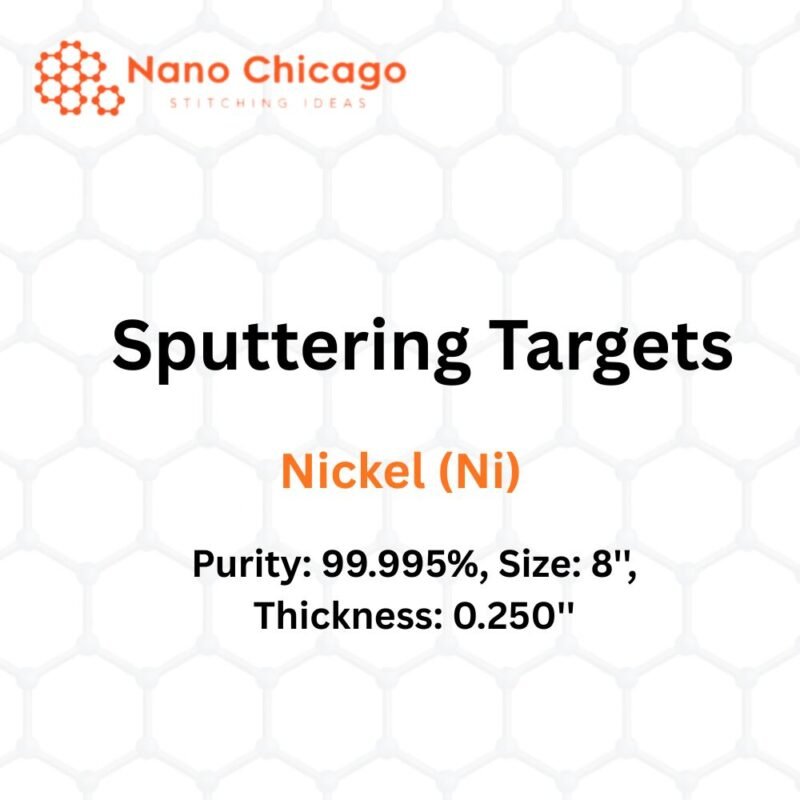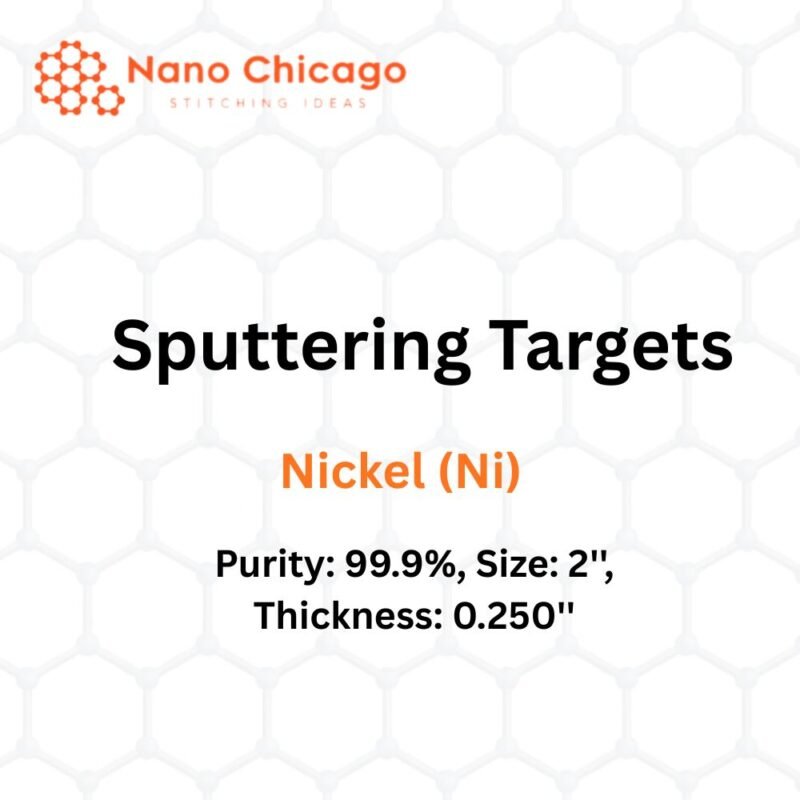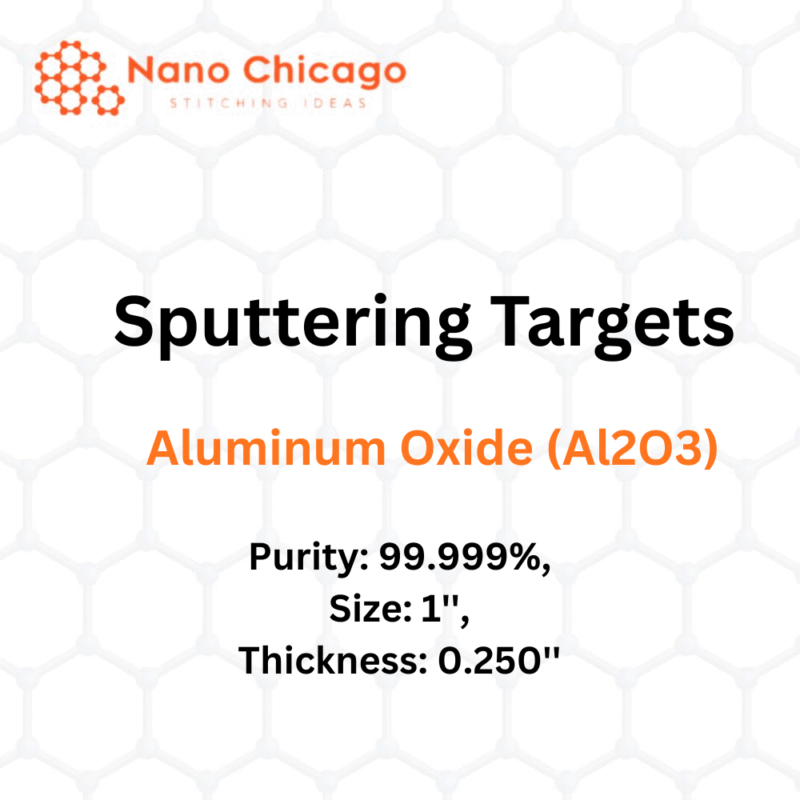
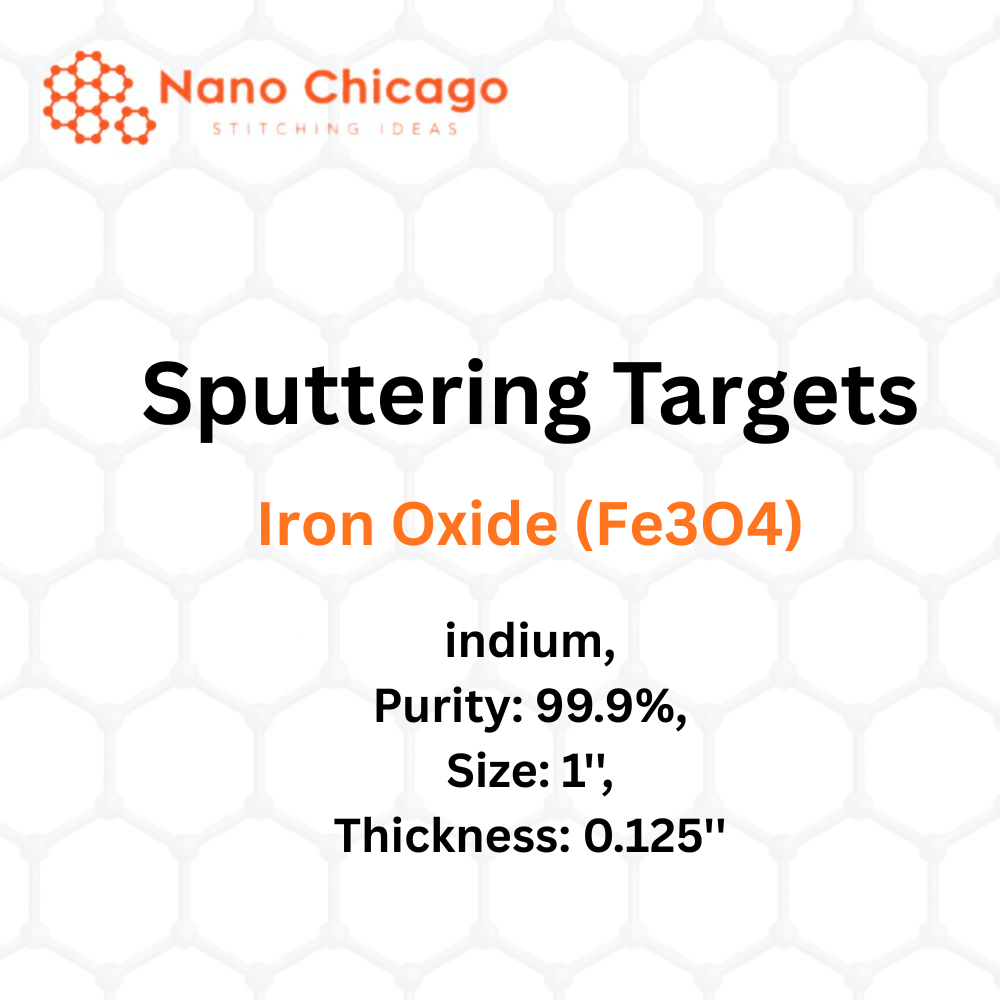
Iron Oxide (Fe3O4) Sputtering Targets, Indium
Technical Specifications
| Property | Value |
|---|---|
| Purity | 99.9% |
| Size | 1” |
| Thickness | 0.125” |
Overview
Sputtering is a well-established technique for depositing thin films from a wide range of materials onto various substrate shapes and sizes. The process using sputtering targets is repeatable and scalable, ranging from small research and development projects to production batches involving medium to large substrate areas. Chemical reactions may occur on the target surface, in-flight, or on the substrate depending on the process parameters. While the numerous parameters make sputter deposition complex, they also provide experts with a high degree of control over film growth and microstructure.
Applications of Sputtering Targets
Sputtering targets are primarily used for thin film deposition. The deposition process involves eroding material from a “target” source onto a “substrate,” such as a silicon wafer. Semiconductor sputtering targets are used for etching the target when a high degree of etching anisotropy is required and selectivity is not a concern.
Sputter targets are also used for analytical purposes by etching away the target material. One example is in secondary ion mass spectrometry (SIMS), where the target sample is sputtered at a constant rate. As the target is sputtered, the concentration and identity of the sputtered atoms are measured using mass spectrometry. This allows the composition of the target material to be determined, including detection of extremely low concentrations of impurities.
Sputtering targets also have applications in space research. Sputtering represents one form of space weathering, a process that alters the physical and chemical properties of airless bodies such as asteroids and the Moon.
Applications Summary
Carbon nanotubes doped with metallic nanopowders provide significant enhancements in both electrical and mechanical performance. These improvements include increased hardness, tensile strength, specific strength, and elastic modulus. As a result, these materials are widely utilized across various fields. Some of these applications include: 1-drug delivery, 2-biosensors, 3-CNT composites, 4-catalysis, 5-nanoprobes, 6-hydrogen storage, 7-lithium batteries, 8-gas-discharge tubes, 9-flat panel displays, 10-supercapacitors, 11-transistors, 12-solar cells, 13-photoluminescence, 14-templates.